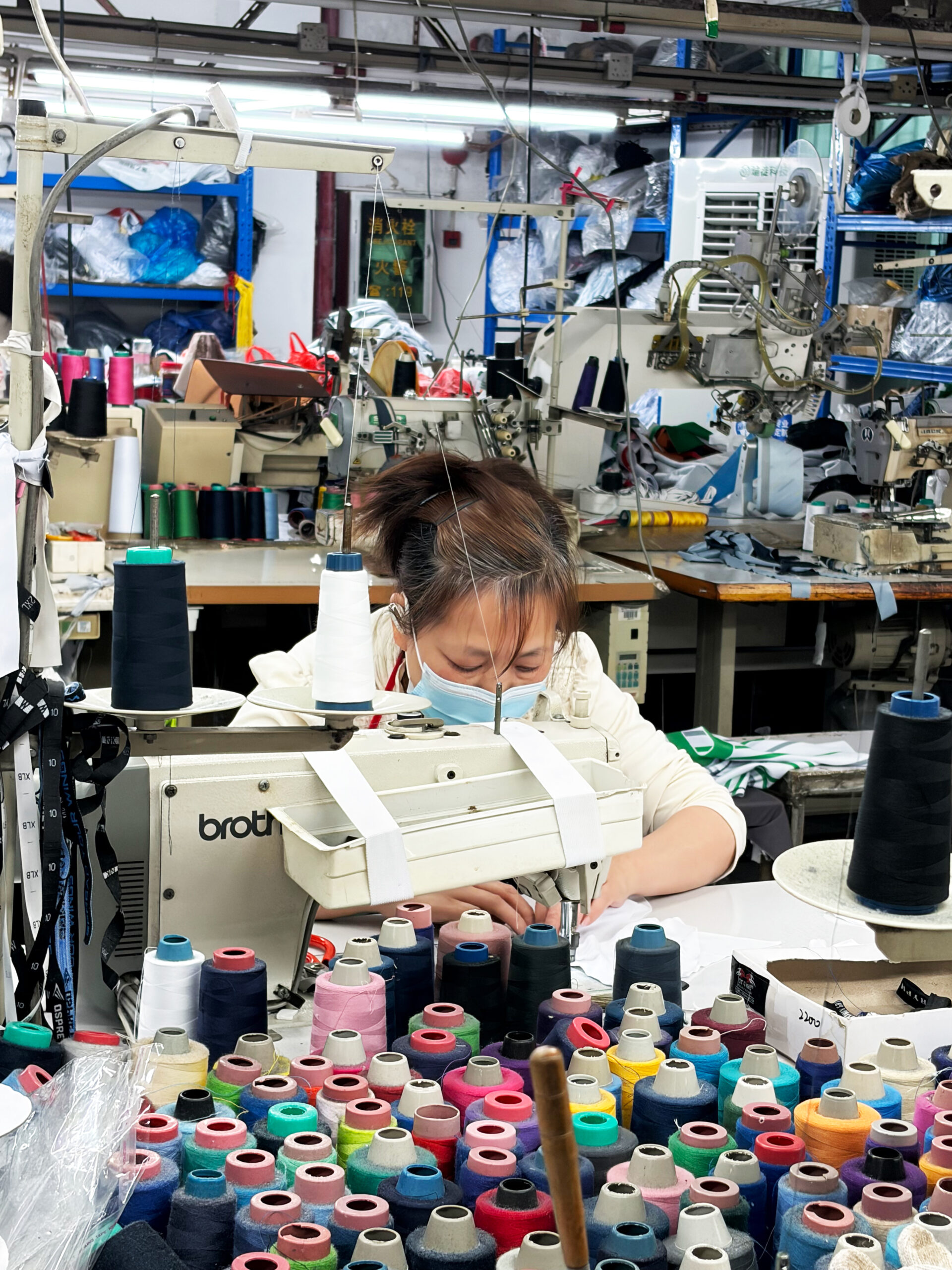
Laser cutting fabric transforms rolls into perfectly shaped panels. Previously, this took hours. Now, precision technology completes it in minutes. Consequently, sealed edges and minimal waste happen on every cut.
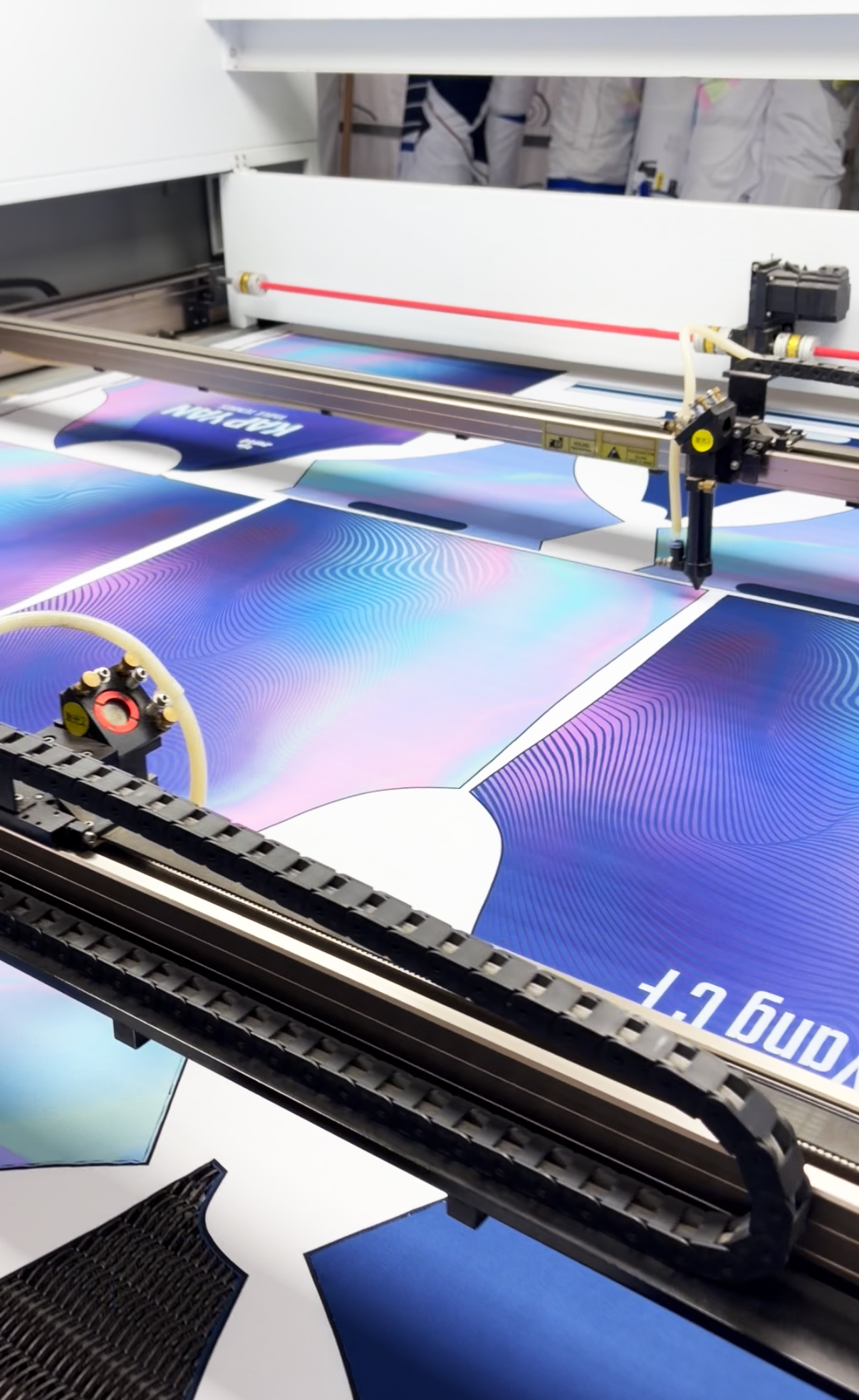
Why Laser Cutting Changes Everything
The Old Way: Manual Cutting Dies
Traditional factories rely on steel rule dies. Unfortunately, this creates problems:
- Setup time: Hours per die
- Minimum order: High volume required
- Edge quality: Fraying occurs quickly
- Design changes: Costly delays
The Laser Way: Digital Precision
Modern manufacturing needs flexibility. Therefore, our system reads vector files directly. Simply upload, position, and cut.
- Setup time: Minutes
- Minimum order: From 1 piece
- Edge quality: Heat-sealed, zero fraying
- Design changes: Instant edits
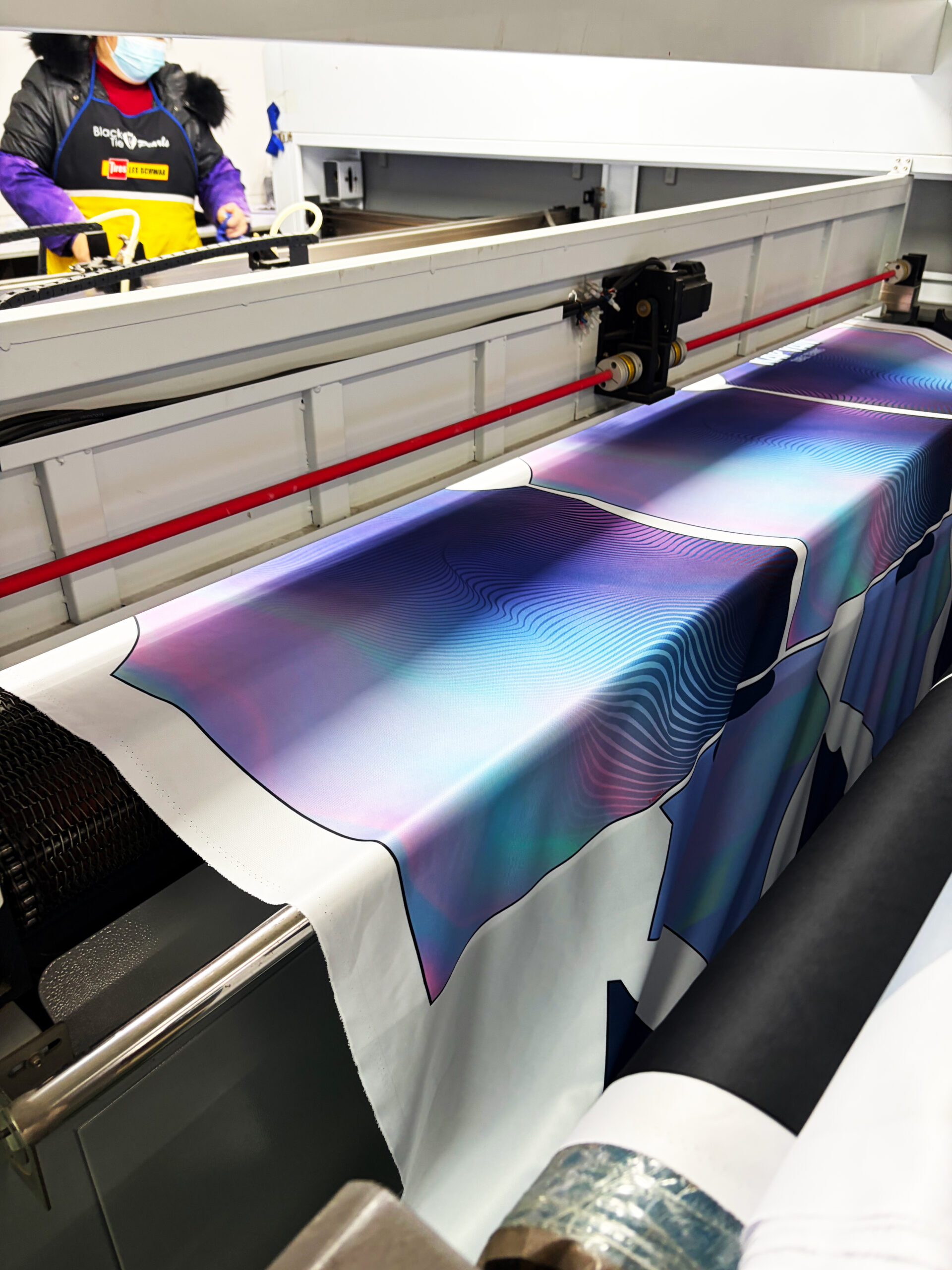
Inside Our Laser Cutting Line
Step 1: Digital Pattern Preparation
Each order begins in Gerber AccuMark. First, pattern makers nest panels like puzzle pieces. As a result, smart nesting saves material.
Then, files export as DXF for our laser system.
Step 2: Fabric Loading & Alignment
Polyester rolls feed onto a vacuum table. Crucially, this holds material flat. Thus, operators align grain lines precisely.
| Parameter | Spec | Result |
|---|---|---|
| Laser Type | High-power CO₂ | Clean multi-layer cuts |
| Speed | High-speed | Rapid turnaround |
| Precision | Tight tolerance | Perfect seam matching |
| Edge Seal | Heat-fused | No fraying |
Step 3: The Cut
The laser head moves fast. Additionally, mirror systems steer beams smoothly. Best of all, edges seal instantly.
By contrast, traditional methods fray over time.
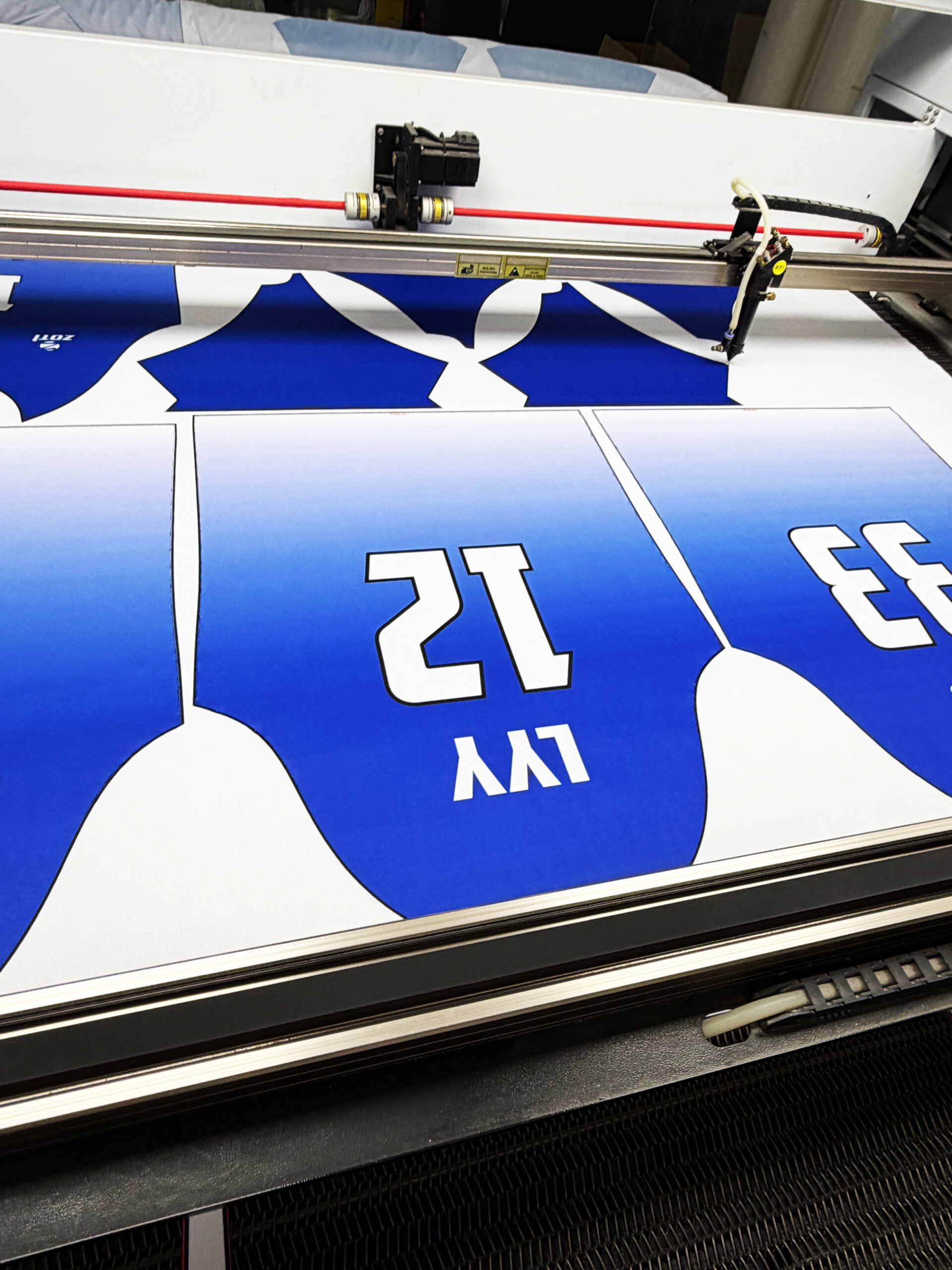
Step 4: Unloading & Sorting
Panels lift easily. Finally, operators sort by size and color. Overall, cycles complete in minutes.
Laser Cutting vs. Traditional Methods
| Method | Setup | Edge Quality | Min Order | Flexibility |
|---|---|---|---|---|
| Laser Cutting | Minutes | Sealed | 1 pc | Unlimited |
| Steel Rule Die | Hours | Raw/frays | High | Limited |
| Rotary Blade | Moderate | Needs overlock | Moderate | Some curves |
| Hand Cutting | None | Inconsistent | 1 pc | Skilled only |
Clearly, laser cutting scales without sacrificing precision.
Materials & Applications
Polyester & Performance Fabrics
Polyester knits are primary. Notably, lasers handle single or multi-layer stacks. Plus, sealed edges save sewing time.
Mesh & Ventilation Panels
Lasers excel at intricate patterns. For example, ventilation holes cut directly—no extra finishing.
Reflective Materials
These dull steel blades. Yet, lasers cut cleanly, preserving reflectivity.
Quality Control: 3-Point Check
1. Dimensional Accuracy
Panels match digital patterns. To ensure this, tolerances are tight. Moreover, recalibration triggers automatically.
2. Edge Integrity
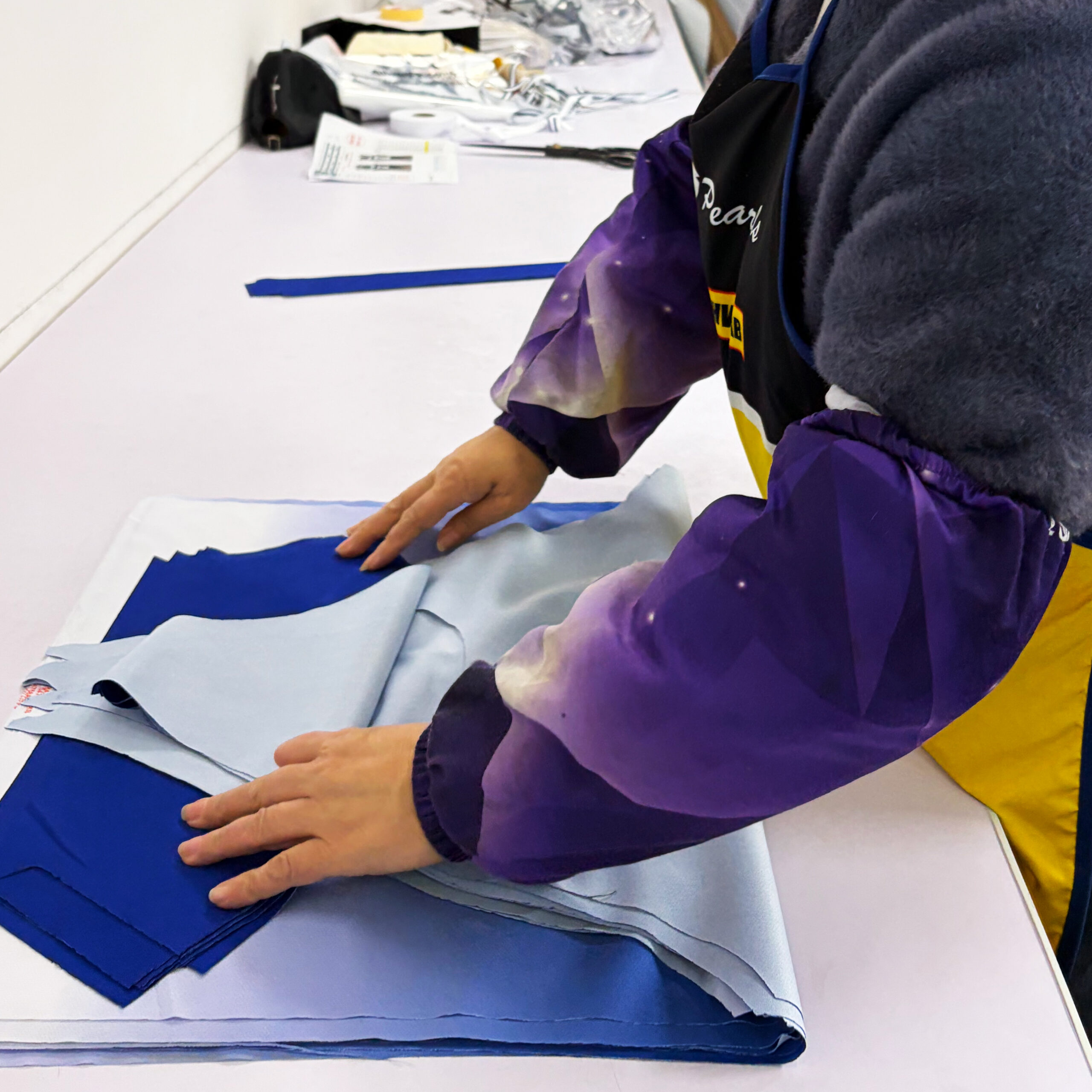
Inspectors stretch edges. Specifically, seals must not crack. Hence, failure rates stay low.
3. Fabric Surface
Light fabrics can scorch. To prevent this, power is tested per color.
Speed & Scale
Clubs ordering multiple sizes once waited days. Now, our line delivers:
- Nesting: Minutes
- Loading: Minutes
- Cutting: Under an hour
- Sorting: Minutes
Thus, same-day completion is standard.
Sustainability
Nesting saves fabric. Indeed, bulk orders reduce waste significantly. Furthermore, dies are eliminated entirely.
Above all, scraps recycle. Zero landfill.
From Laser to Lineup
Laser cutting is smarter. Ultimately, panels arrive sealed, matched, and perfect. In short, jerseys fit right and last.
Undoubtedly, hundreds of teams trust our process. File to fabric: same day. To finished: days, not weeks.
Ready for Precision-Cut Teamwear?
Upload your pattern. Then, receive samples in 48 hours. Request Quote →